


On my way back from SCEWC, summing up some insights (see also @Mikael Edelstam or @Graham Colclough for thoughtful LinkedIn posts)
1) Two key words for this year: one, new scaling, and an old one, still not very well defined, resilience (you can basically throw everything in it).
Scaling demonstrates cities’ and their partners’ willingness to go beyond pilots and deploy climate solutions at scale. This raises new challenges, as stressed by several projects and keynote speakers: lowering the costs of climate solutions to make them affordable; financing and public-private partnerships; organisation and governance. A word is missing its speed here, but it is probably the most complicated issue. One pathway could be, in addition to the recently announced Scaling Up Fund, the creation of a large pan-European Climate Cities Impact Investment Fund. However, Europe is still very fragmented, the capital market is still in the Draghi report, and this complexity entails costs and delays (France is a leader in these areas!). Carefully designed, the CCIIF could be a significant game-changer for that.
But the challenge also lies in cities speeding up deployment. Governance is key—that is not new—and several options can be used and combined, as Dijon and Lyon have shown during the SCEWC: a deep transformation and decisive leadership from the city, coupled with a Special Purpose Vehicle—the SEM Energy—to accelerate the deployment of solutions. Or the SPL Lyon Confluence to deliver in strategic areas, Positive Energy Districts. Solutions are there, they can be easily replicated, but as Amin Haddadi (city Oslo) pointed out, there are myths we should get rid of: breaking the siloes in one of them, siloes will always exist (and it is a good thing as you need focus and competencies to run a transportation policy for instance), the question is more how to manage the cooperation (without forgetting that collaboration has a cost)
2) AI is another big topic, and Nvidia’s presence is a surprise: how a company so profitable considers making money in the public sector is an enigma. I am still considering the question after almost 30 years (yes, this is also the big difference between a businessman and me). But I found the debate relatively peaceful compare to the AI war overseas, piling up Gigawats to feed larger and larger data center (and preparing, according to certain experts, the most gigantic bailout of history and for others, the venue of the AGI or at least automation of cognitive tasks (with severe consequences). In Barcelona, we had excellent presentations of Munich (AI Assistant in Hartof District), Porto (blueprint for energy communities), Lyon Confluence (Digital Twin of la Confluence District), which almost won an SCEWC award. Digital twins powered by AI are already here—and they’re probably the future—but it will require a bit of patience, as a whole transformation is at stake! Here also a connection between the AI strategy and the city domain. We know that the competition of today toward LLMs and AGI is likely a dead end for Europe. Instead, developing the small and specialised AI models is probably a better strategy as the outcomes are usually better (hallucination might be also avoided for instance). Developing AI-specialised models for urban policies, planning, energy, biodiversity, enhancing decision-making, and the daily work of urban planners is likely a very good option to pursue! See EDIC and the TEF!
3) The international footprint of the SCEWC is expanding across many countries, as shown by the booths and the award results!
I didn’t attend the entire ceremony, but what I have seen is: no success for Europe and awards for the US, China, and, I guess, Korea. Notably, the award in the energy environment category was inspiring: the city of Guangzhou (18 million inhabitants) won, and the Lyon Confluence district (17,000 inhabitants) was second. A bit like David and Goliath, but with the reverse result! The Guangzhou project looked really impressive and massive. We don’t compete on an equal footing (see data regulation, for instance), and you can also question the values behind it (even if, in the wonderland that the SCEWC booths are, we are all inclusive, people first, and other delicacies). The real question is: we see China manufacturing most of the key clean technologies needed (consider batteries, PVs, e-vehicles, and others), and playing a mineral geopolitical card, while Europe is still a scattered continent, still a manufacturing power, but very challenged! On the upside, we see positive announcements: the Industrial Decarbonisation Bank for hard-to-abate sectors, the Scale Up Fund, and, of course, the clean industrial deal. Would it be enough to catch up? The KFs will, as always, be pragmatism (and in Europe, sometimes we lack it, considering the striking example of Guangzhou; when we were issuing mandates and regulations, China was building a clean tech manufacturing colossus.
And I guess that even if the underlying reasoning that Europe can pave the way for decarbonising cities is challenged, the European model is likely the most appealing one. See for instance the growing American community in Barcelona (and also in the train to go to barcelona)!
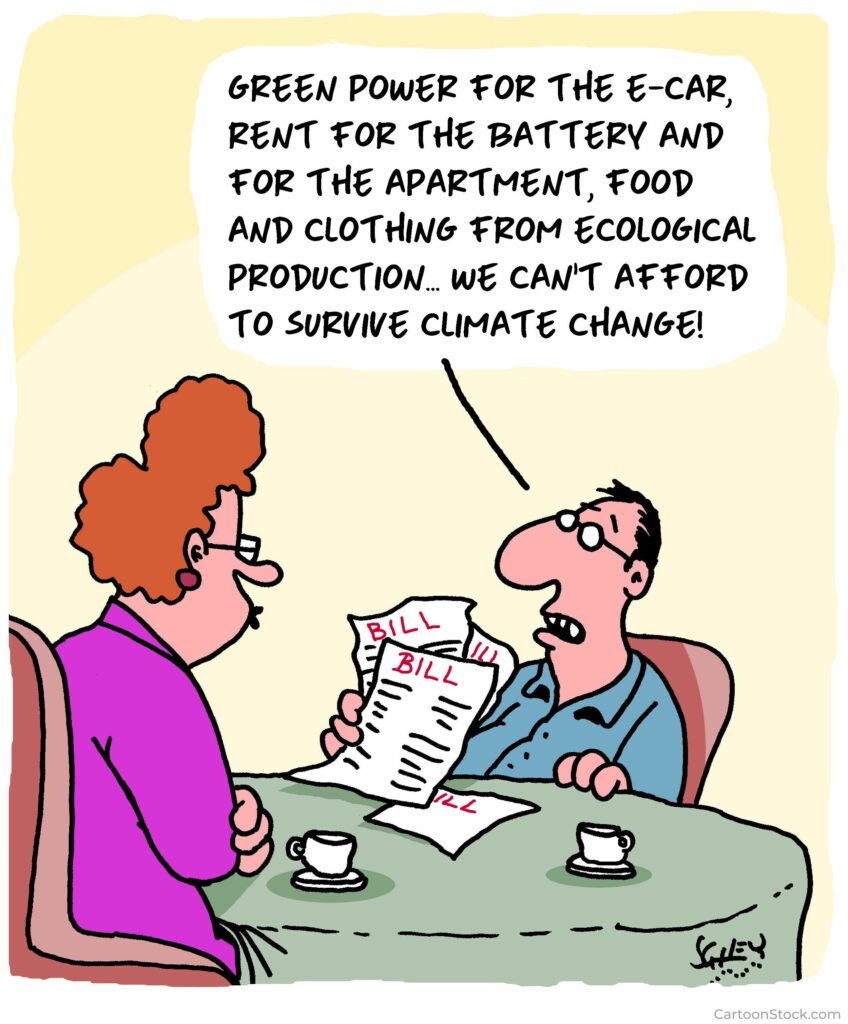
4) Citizen participation and engagement are at the top, like in the previous years. That is also not news. Alexis de Tocqueville had already noted that democracy is more efficient with committed citizens. And citizen participation has been the alpha and omega of urban policies for decades. Sometimes, the hidden rationale is that we need to change citizens’ behaviour so the climate transition will be successful. I believe there is an underlying rationale here that isn’t super pragmatic. Behaviours are what they are; most of the time, they are rational in the mind of our pairs. They need energy like fish need water. The idea that you can convince them to change without offering an affordable, usable alternative is unlikely to be true. We certainly need to reset the reasoning about citizen participation, offer solutions, and untangle their complexity. Here, Porto, Lyon, and Stockholm showed interesting projects where they create energy communities for inhabitants, taking over to create a scale needed, providing services and handling the boring things (invoicing, procuring etc). We expect to find the missing link to scale these initiatives at city level. Resetting the reasoning is also exploring the Climate dividend approach (quite effective in the companies’ domain) to urban projects so we can create a dividend when carbon is saved, monetisable or not, tradeable or not (but let’s not play bitcoin)
A pragmatic reset?